Showing posts with label War of the Worlds. Show all posts

Tuesday, 3 June 2014

A Brave New World: The Japanese Devil Fish Girl

The War of the Worlds is a science fiction masterpiece by H.G. Wells, and do I really need to say anymore? If you haven't read the book, you've seen one of the movies, or listened to the rather superb (and in many ways emotionally and arguably narritively superior) Jeff Wayne rock opera, or perhaps you've read a comic or played the RTS game I mentioned in another blog - Either way, if you were presented with a vague, tripod like alien with metal tentacles swirling around it's flat hood like head you'd know what it is and where it came from. As such, The War of the Worlds has attracted many retellings over the years, many adaptations, but also many quasi-sequels.

I didn't really discover this fact on purpose, it was more a fact of the supposed sequels finding me over the years and not me actively looking for them, but when I saw how many there were some part of my hospital addled brain decided I needed to read them. So I'm going to share with you the results! These will be special little footnote editions of From Cover to Cover, where I take each book and examine how the two sides of the war for London town fared after the original novel, how these novels stack up as the sequels to the original they present themselves as and perhaps, most importantly, how they stack up as books in their own right. So let's get started with our first candidate, The Japanese Devil Fish Girl.


Authored by noted humourist and proprietor of far fetched fiction Robert Rankin, The Japanese Devil Fish Girl and Other Unnatural Attractions was published in 2011. It takes place a decade after War of the Worlds (at least, it says it does but in reality seems to play fast and loose with the novels time line to suit its own ends), where the British Empire has not only managed to backwards engineer Martian technology for their own use, but also signed trade agreements and diplomatic alliances with emissaries from Venus and Jupiter. The story follows George Fox, a side show Zany (he prefers the term assistant) to an eccentric show man. Their main attraction, a dead, but anatomically whole Martian, is rotting fast and they need something fresh, new and exciting to pull in the Rubes. This leads them on a quest to find the single most awe-inspiring attraction on Earth - The legendary Japanese Devil Fish Girl.

How does mankind fare in this world post alien contact? As it turns out, extraordinary well. The novel most certainly presents us with a situation where man is on top again, or at the very least, the British Empire is. Having mastered Martian space travel and the terrifying might of the heat ray for their own use, the Empire has raised the one and only spaceport in the world next to Crystal Palace. They also have exclusive rights to intergalactic trade and diplomatic routes, leaving the rest of the world cold, and access to all the kinds of technology you'd expect in a steampunk novel. From airships, to steam cars, to the early onset of electricity, even the mighty Tesla coil makes an appearance. For some reason the fashion of small, accessorised goggles and cumbersome brass corsets has also caught on... But more on that later.

As for the Martians? Exterminated. Gone. Dust. The fact that they mounted a similar attack on Venus at the end of the original novel is either glossed over or forgotten, and I can only assume that that the Venusians repelled their advances and forced them back to their red orb, where the British Empire finally put the boot in. The solution to the problem of further invaders from Mars is possibly one of the highlights of the book. It's cold, it's callous and it's... Kind of genius in it's own way, and the historical figure that came up with it adds a nice little cherry on the cake.

When it comes to the themes and ideas that the novel brought over from the original, I can only shrug and say not many. The chapters are short, much like in the original, and there are Martians. The heat ray is about the only part of the mighty Martian armament that makes a return, with the Empire deciding instead to stick to the wheel and employ much clunkier airships than the Martian flying machines they had supposedly cracked. Wells' book is treated as a historic document, and the one theme I was surprised to see it pick up was the damning of Imperialism and the inward looking selfishness of the Empire that prompted Wells to originally write the book. Of course, being a humourous title a lot of that is there in the form of jokes and ribbing at the United Kingdom's perhaps chequered past, but still. It is there.

So, how good is this novel as a sequel? Honestly, not very. If you're looking for an absurd, steampunk tale that encompasses Wells' material but could just as easily not have done, you might enjoy this. If you're genuinely curious on Rankin's perspective of what might have happened after the Martian invasion, don't bother. The toughest thing for me to swallow is Rankin's insistence that the British Empire backwards engineered Martian space travel in less than a decade. I only find this unbelievable because... Well, the Martians literally shot a cannister through space. I suppose with enough time and research and some wonderfully fantastic minds behind the project you could backwards engineer a gun from the bullet fired from it, but I find it incredibly unlikely.

The technology in general has more in common with standard steampunk fare than anything in War of the Worlds, which is a shame as the presentation of how everything the Martians brought to Earth was carefully considered and wholly it's own. There's a reason the tripod with it's human collecting cage and flashing box like heat ray and whipping, writhing tentacles has become so iconic, and it's a shame Rankin chose not to take advantage of this and instead cling onto something we've seen a million times before. I suppose you could excuse this by saying the technological ideas came from the other alien races he introduces, but we see their technology later in the book and it resembles nothing humanity has come up with either.

Speaking of those aliens, they are another great shame. While Wells' vision of a giant brain on tentacles that sought subsistence from the blood of other beings may enter the realm of 'squint really hard and you can believe it's possible' in scientific terms, at least it's a wholly inhuman and different take on alien life. Not so with the men from Venus and Jupiter. They're you're standard humanoids with bits on, and even though I know the whole enterprise is a wacky comedy novel, considering the book it preports to follow I can't help find the execution of these elements lazy. More just another steampunk book cashing in on the trend than bringing anything new or interesting as a follow up.

The question is, does it fare any better as a book in it's own right? And to be honest, I think the term 'lazy' can be applied across the board. Lazy humour. Lazy integration of historical figures. And a lazily plotted story where all the twists can be seen a mile away.

 The humour of the book relies mostly on running gags, glib asides and the forceful integration of the modern into the Victorian Age. The problem is that for me, the majority of them completely missed the mark. I didn't find many of the running gags funny the first time they appeared, so to see them again and again drove me to frustration. The glib asides were either so glib or so overt that their effect was lost and as for the modernisms, I felt they could have been handled better. To draw comparison to Terry Pratchett, the key to his success is that while he writes satire of very modern concepts, he never lets that satire break the believability of his world. He takes the time and effort to weave these concepts into something that you can believe would be a part of his universe, but is still recognisable for what it really is. Rankin instead relies on the sudden, often jarring, insertion of a very modern concept and perhaps wishes to take the reader off guard or make them laugh at the absurdity of it. All it did was take me out of the book, especially the customs and immigration joke which made me groan and want to punch the page everytime I had to suffer through it.

But humour is subjective. What I find groansome, others may find side-splitting, so let's instead focus on how Rankin treats his historical figures. Slap-dashly, is the word (sort of!) that comes to mind. After having read the Burton and Swinburne series, novels which take great pains to use both persons of interest and noteworthy events (such as the downing of the Royal Charter in a storm or the Tichborne affair)  of the period and even the writing styles of authors who appear in the pages to tell an original story. Mark Hodder takes great care to link his characters together, and use actual events with brand new explanations and twists to bring his novels to life and ignite your curiosity about the era. Rankin takes a 'history is bunk' approach and uses figures who are long dead, with no explanation but the one I just gave, and throws them at us with new twists that never come to anything. Joesph Merrick, as Jack the Ripper, for example is only mentioned in passing and when a murder happens on the airship they are travelling on him with it is never linked back to him. Indeed, he is never mentioned again. Hitler also appears as a surly wine waiter. Why? Because Adolf Hitler in a pedestrian and subservient role is funny, I suppose. I would not even take issue with this, but there are so many historical persons living lives long past the ones they are due and it is never tied or factored into the actual story, it just exists as one of the many, tiresome long running jokes.

But the real reason I can't recommend this book is purely down to the writing. It's not atrocious, most certainly not, and it doesn't outstay it's welcome. The book is a breezy read, and has just enough going on to keep you interested, but as I said before the plot is predictable and the style it's written in does nothing for me. The worst offender is Rankin's continuing insistence of using terms like 'George did many sighings' or 'Ada did crossings of her arms' instead of 'George sighed' or 'Ada crossed her arms'. It perhaps seems innocuous to you and like I'm being nit-picky, but seeing it over and over and applied to turns of phrase that it clearly doesn't suit simply drove me batty by the end. The characters are also wholly uninteresting for the most part. Caricatures of famous historical figures that are drenched in nudge-nudge wink-wink hints to their future and the main characters of George and Ada, while initially charming, became gradually more boring as the novel progressed. As for Professor Coffin, I was intrigued and interested in the spritely old man at first, but he soon became a pantomime villain and Rankin couldn't quite make him as detestable as he wanted too. Even in the end, I was almost rooting for him. Almost.

Down to rating it is, then. Pretty simple and cut and dry to be honest. While initially charming and with some moments that made me smile, this book just needed more work. More work in every possible aspect to bring it up to the standard that it's premise, and supposed connections, promise. More damning though, is the fact that it's a book that thinks the use of the word 'wee-wee' and dung throwing are funny enough for multiple appearances. Which should tell you all you need to decide if the humour is for you.

Two out of Five Monkeys.


Wednesday, 16 April 2014

Enter Diablo!

Over a decade ago now, having shed my Acorn computer for a legitimate PC that could play actual PC games a couple of years prior, I was still experimenting with games that I might like. Usually I was drawn to curiosities, like the Oddworld series. A hugely frustrating set of games, that just seemed to reel you in for more with their off the wall humour and glorious and inventive world design. I think Oddworld lay some of the groundwork for what I like in games, as I'll admit that I'll happily put up with tedious mechanics and gameplay that I may not particularly enjoy all the time for an engaging world, a good story and interesting characters. Going back to Oddworld, the timed bomb sections, where you had a row of bombs that could only be deactivated by hitting them when the lights on top of them flashed green and if just one blew you to tiny little meaty pieces, you had to go back and not only do them all again, but a ton of platforming sections as well, almost drove me off that game completely. 

I often find myself in much the same kind of scenario in modern games too - Bosses with unfair mechanics built into them to make them artificially harder, timed missions that can only be completed with a scant few seconds to spare so you have to play them near perfectly to progress, obligatory vehicle sections that barely work, repetitive side missions, all hallmarks of bad game design. But all things I'll put up with if the game world is interesting enough. 

During this time I was also prodding at the world of RTS. I was already deep into Red Alert 2, and once the gleam started coming off that and I realised I couldn't make good custom maps for it to save my life, I started looking for something else. I'd played the game based on War of the Worlds, which was a rock solid RTS that let you play as both martian and human alike accompanied by extracts from Jeff Wayne's glorious rock opera as a soundtrack. I owe that game for introducing me to that musical triumph, but I also owe it for feeding my imagination with beautiful cut scenes like this. 


Sadly rather poorly recorded there, but you get the idea. I soon found that I wasn't particularly interested in modern warfare, in Red Alert I loved the weird science elements and exaggerated Cold War vehicles that gave the series it's character and in War of the Worlds I loved the Victorian sensibilities of the humans, with their steam powered tanks and primitive submarines, and the elegant, alien war machines of the martians. It wasn't until a tiny company that you might have heard of called Blizzard released their latest game that I found another RTS that I could really sink my teeth into and get hooked on, and that game was Warcraft III

At the time, Warcraft was unlike anything else I'd played. I'd never experienced a Warcraft game before, and found the slightly cartoony graphics and colourful, expressive art style to be a delight. Getting deeper into the game, the mechanics were fun, the initial units all seemed to have their own quirks and then I got into the story I found myself getting attached to members of all factions. The story of Warcraft III wasn't just a matter of all four factions fighting against each other, there were splinters in the factions themselves and each character was not only struggling against their external enemies, but often internal squabbles and betrayals. I found myself attached to Illidan and Kel'Thuzard, despite the fact there's a case to be made that they're both terrible people, and I found myself a tiny bit heartbroken by the eventual fate of Sylvanas and Grom. And of course I hated Arthas with a firey passion.But who didn't? Not to be inflammatory, but idiots, that's who. The fact I could get so involved in the world and story of an RTS was mind blowing, and I absolutely loved the fact you had a hero on the battlefield you could level up throughout the mission, giving it an RPG element to it as well. 

Once I'd finished the expansion The Frozen Throne, I was more than ready for Warcraft IV to come along. It was one of the first games I could imagine myself being truly hyped over, and I'm sure you all know how that turned out by now. Since then I've had very little to do with Blizzard as a company. I was never really able to get into Starcraft, even though it was dripping with fantastic humour and both Jim Rayner and Kerrigan were fantastic characters, I just didn't find the gameplay or overall story as engaging as that of Warcraft's. I also have no interest in MMOs, a game genre that seems to take the worst parts of RPGs and put them front and centre, so World of Warcraft was never going to be for me. I kept tabs on the lore for awhile though, but with each new expansion bringing about the death of a character I once loved, I soon just gave up on that too. I was curious about Starcraft: Ghost, and have played a little Hearthstone recently, but with WoW being their one big product and Starcraft II not drawing me in as I'm afraid I might be a little lost having not finished the original, Blizzard and I haven't really crossed paths much in the intervening years. 

Until a few days ago. 

About a year ago, Blizzard released the third game in their other big tent pole franchise, Diablo III and from what I gleamed at the time it was a disaster. Always online DRM and in game loot that seemed to be programmed to bolster the online auction house instead of enhance player enjoyment made the game sound like a terrible deal on launch. I'd also never been into dungeon crawlers, but Torchlight II had opened my eyes to just how fun they could be and when I started to hear that the latest patch ahead of their expansion for the game was making Diablo sound a lot more fun and a lot more playable, well I had to give it a try. 


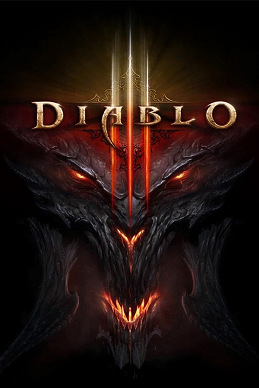
Upon it's arrival, I couldn't help but notice how pretty the box art was. Certain PC games seem to have taken an unusual approach to packaging their games. They have a box that opens out at the front, revealing very pretty art and... Nothing else. To get to the game itself you have to open up the top, as per usual, and more often than not are met with a standard issue plastic DVD case. That being said, Diablo's cardboard inlay is a rather beautiful affair that opens out into even more beautiful art and some gameplay screenshots from here. 


Inside I hoped to crack open the DVD case proper to find a big, meaty manual - Mainly because that's the kind of thing I like with my RPGs, even if I never read most of it. It's nice to have something I can just quickly reference without having to load up Google, but alas nothing here. What I did find though, was these. 


Oh Blizzard, you savvy corporate whores, you! 

Getting into the game proper, after a standard issue install, registration, log-in, etc. All the joys of PC gaming that have been around as long as I've been PC gaming, basically! I was treated to a rather impressive opening cinematic. I feel like I can't give Blizzard too much credit for this, as they've practically honed it down to an art over the years. They are the company that gave us gems like these. 


Character creation is nothing to really shout about. You have a choice between Barbarian, Demon Hunter, Monk, Witch Doctor and Wizard. You can also choose Crusader, but only if you buy the brand new expansion Reaper of Souls. Which was prominently advertised to me before I started the game, and I feel like having the Crusader sitting there on the selection screen is just taunting me in and of itself. The character creation amounts to each character class having two character models, a male and a female, with no option to customise them beyond that. I'm a touch disappointed in this, as even Torchlight II had limited character customisation on it's various classes, and for a company as big as Blizzard with their extensive experience in the MMO field to come out with such a basic system is a touch baffling. I was also rather disappointed you couldn't put spaces in your name. What if I wanted to be a barbarian called Conman The Boobarian? Or just wanted to give myself a surname? That's a basic thing that can add just a touch more depth to your character, but unless you want to be known GeraldHarrison throughout the game it's impossible. 

With thanks to vicogaming.com for the image.
Eventually I chose the female Witch Doctor, based on the fact that she had a pretty kick arse mask. Of course, my first mistake was assuming that the gear I was looking at in the character creation was my starter gear. Oh no, friends, as soon as I was dropped into the game they stripped all that away. Literally. 

With thanks to the Something More Than Sides blog for the image.
I was in my underwear. *sigh*

Once I was over that madness, I began to get into the actual game play and I have to admit - It's really fun. I think the Witch Doctor was a good choice for me, as I really enjoyed her initial blow dart attack and her first passive, which grants you three protective demon hounds, has been pretty helpful in not getting me killed. She also kind of reminds me of the stoner trolls in Warcraft III, which is possibly problematic when we're talking about the only black human character in a game and not a bad Jamaican stereotype hiding behind a bunch of skinny blue trolls, but I have to admit it makes me smile anyway. 

One thing that did baffle me, and that game manual I talked about earlier would have come in very handy to explain, was that once I gained my second power it wiped my standard melee attack from my hotkeys and I couldn't find a way to get it back anywhere. I've read that if you're playing a caster weapons become largely obsolete as things you hit people with, and instead their stats bolster your spells and other abilities. My mind can see how this logic makes sense, but on the other hand, sometimes I just like having the ability to bash something over the head with my sword. I think I might have to play as a Barbarian at some point, if only because I'd like to see how the weapon animations work at some point. 

That being said, Diablo's dungeons are fantastic - Both the quest dungeons, and the optional dungeons you can walk right past if you like. I was charged with finding a crown in a crypt, and there were three choices of door to go down to find it. The first door I went down turned out to be on the one the crown was in, but for a lark I explored the other doors and I'm glad I did. They had the best loot in them that I'd found in the game, a variety of interesting enemy types and some of the other optional dungeons I've been in were rather sprawling and bore exploration in their own right. Considering this is the meat and bones of the game, I'm glad they nailed this. If I have one complaint so far, it's that the game is too easy. I'm not sure if that's just because I have decent gear and it's early game, or if I need to up the difficulty a bit, but we'll see how things go and I'll adjust accordingly. 

There are a few other nitpicks and praises I could level at that game, but I think having spent a couple of hours on it the highest compliment I can give is that I'll definitely be playing more. Character customisation seems to come more from loot and gear than anything else, and while I'd prefer the colour palate to be a touch brighter, at least the darker, moodier tone they've gone with fits the world and story. Overall, I like it, and if I could send but one message to Blizzard it'd be 'Something as fun as this again, please! Maybe Warcraft IV afterall?' 

A man can hope, a man can hope...